

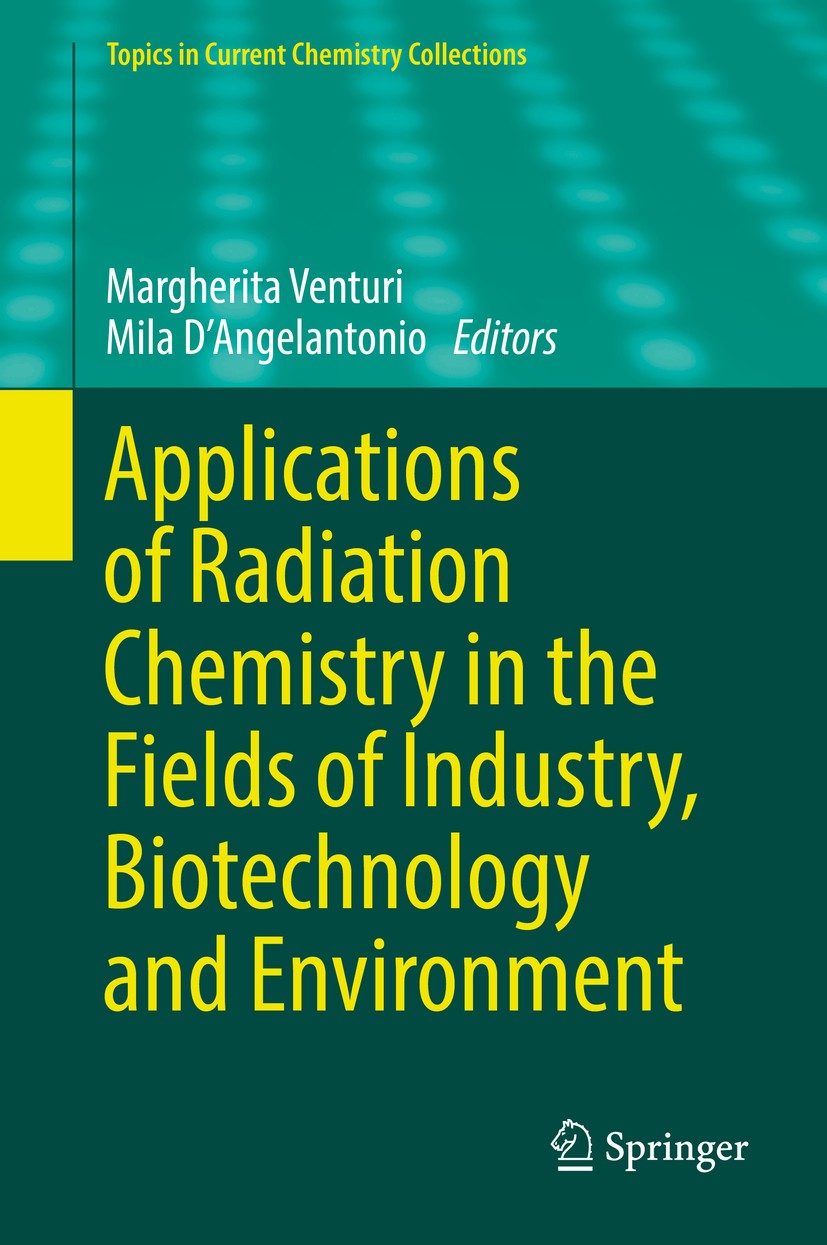
The book "Applications of Radiation Chemistry in the Fields of Industry, Biotechnology and Environment" explores the diverse and impactful uses of radiation chemistry across various sectors. It provides a comprehensive understanding of how radiation-induced chemical reactions are applied to solve real-world problems in industrial processes, biotechnological advancements, and environmental sustainability.
Overview of the Book
Key Themes
-
Industrial Applications:
- Radiation processing for polymer modification (e.g., crosslinking, grafting, and sterilization).
- Production of advanced materials like hydrogels and nanocomposites using radiation.
- Applications in food preservation, including microbial decontamination and shelf-life extension.
-
Biotechnology:
- Use of radiation in pharmaceuticals for sterilizing medical products and drugs.
- Enhancing genetic mutation for improved crop varieties and microbial strains.
- Role of radiation in enzyme and protein modification for industrial biotechnology.
-
Environmental Protection:
- Wastewater treatment using radiation to remove organic pollutants and pathogens.
- Air pollution control by breaking down hazardous gases like SO₂ and NOx.
- Management of solid waste, including hazardous and radioactive waste.
Scientific Insights
- Detailed mechanisms of radiation-induced chemical reactions.
- Techniques like gamma irradiation, electron beam processing, and X-rays.
- Case studies and practical examples showcasing successful applications.
Target Audience
- Professionals and researchers in radiation chemistry and chemical engineering.
- Students of environmental science, biotechnology, and industrial chemistry.
- Policy-makers interested in sustainable industrial practices.
Key Features
-
Interdisciplinary Focus:
The book bridges concepts from chemistry, biology, and environmental science, demonstrating how radiation can drive innovation in various fields. -
Problem-Solving Approach:
It emphasizes practical solutions to critical challenges like pollution, industrial inefficiencies, and medical safety. -
Rich in Research and Case Studies:
Real-world applications and scientific data make the book an essential resource for both academic and professional settings.
Significance
This book highlights the transformative potential of radiation chemistry, offering insights into its applications for sustainable development, cutting-edge biotechnology, and innovative industrial processes. It’s a must-read for those interested in leveraging radiation for societal and environmental benefits.




